

Since July 2025, Sherwin-Williams has been in a holding pattern, posting a small return of 4.8% while floating around $356.46.
Is now the time to buy Sherwin-Williams, or should you be careful about including it in your portfolio? Dive into our full research report to see our analyst team’s opinion, it’s free.
Why Is Sherwin-Williams Not Exciting?
We don't have much confidence in Sherwin-Williams. Here are three reasons there are better opportunities than SHW and a stock we'd rather own.
1. Core Business Falling Behind as Demand Plateaus
We can better understand Building Materials companies by analyzing their organic revenue. This metric gives visibility into Sherwin-Williams’s core business because it excludes one-time events such as mergers, acquisitions, and divestitures along with foreign currency fluctuations - non-fundamental factors that can manipulate the income statement.
Over the last two years, Sherwin-Williams failed to grow its organic revenue. This performance was underwhelming and implies it may need to improve its products, pricing, or go-to-market strategy. It also suggests Sherwin-Williams might have to lean into acquisitions to accelerate growth, which isn’t ideal because M&A can be expensive and risky (integrations often disrupt focus). 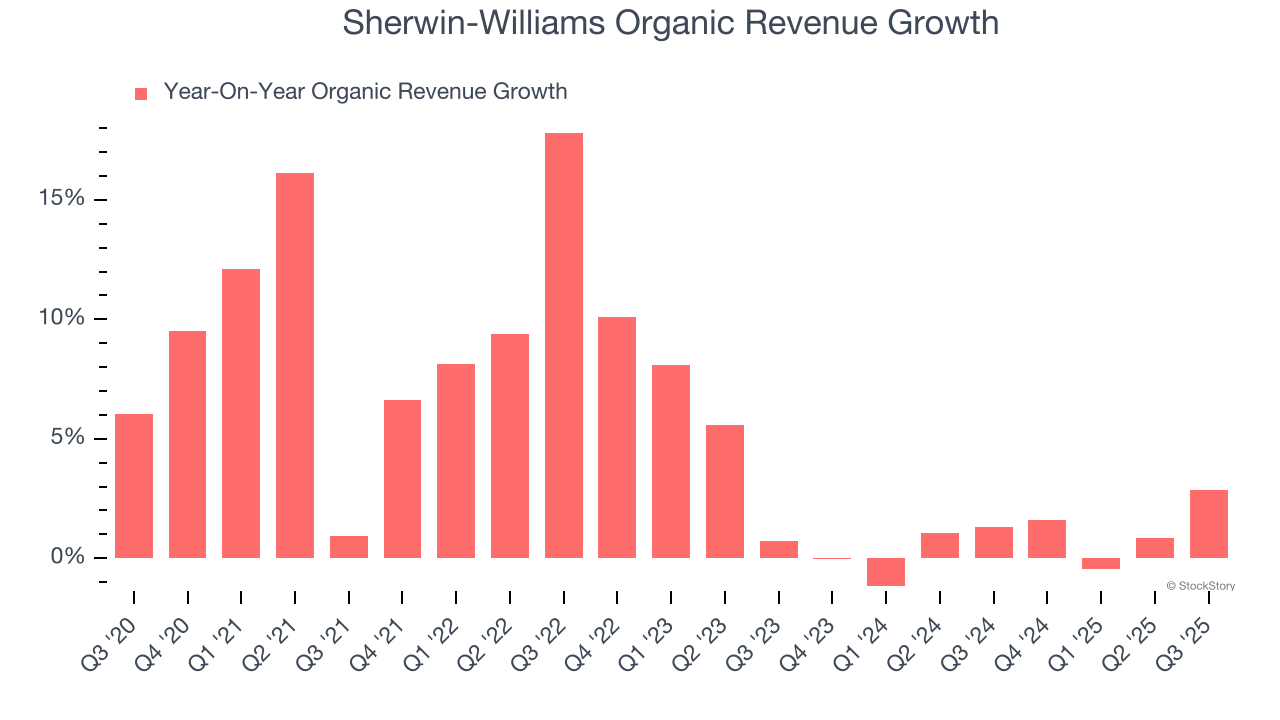
2. EPS Barely Growing
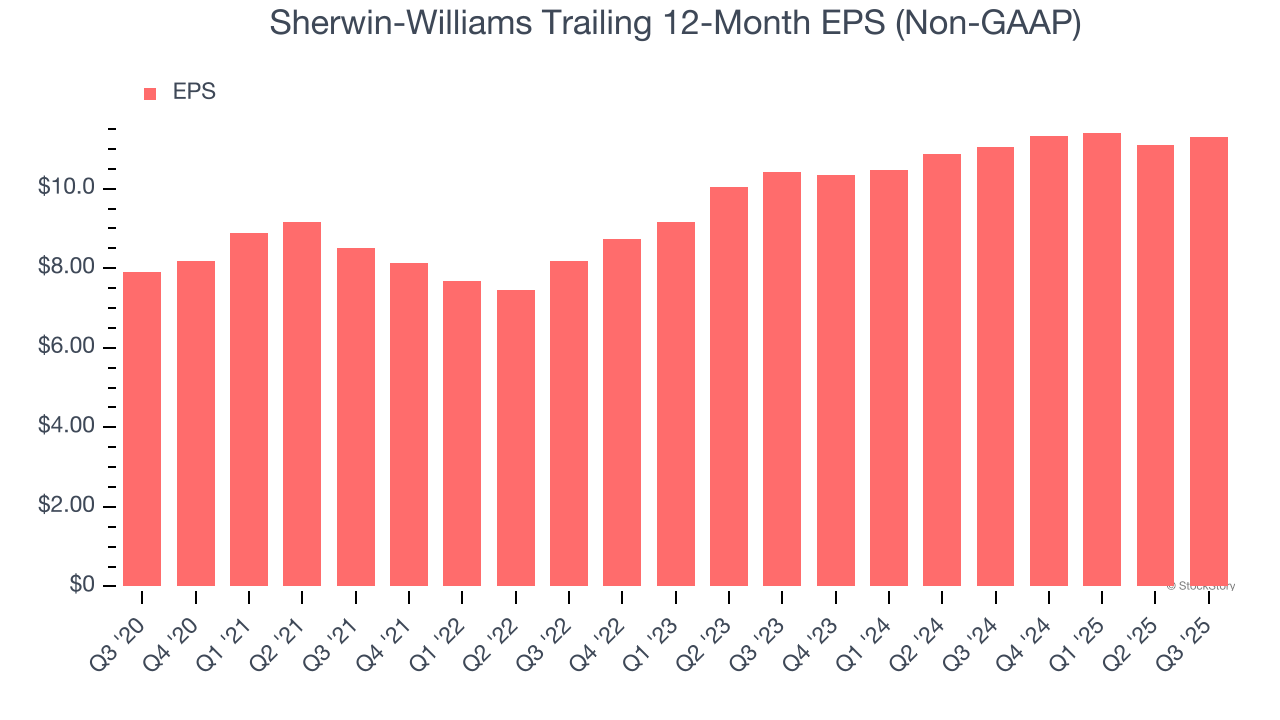
Analyzing the long-term change in earnings per share (EPS) shows whether a company's incremental sales were profitable – for example, revenue could be inflated through excessive spending on advertising and promotions.
Sherwin-Williams’s EPS grew at an unimpressive 7.4% compounded annual growth rate over the last five years. On the bright side, this performance was better than its 5.3% annualized revenue growth and tells us the company became more profitable on a per-share basis as it expanded.
3. Free Cash Flow Margin Dropping
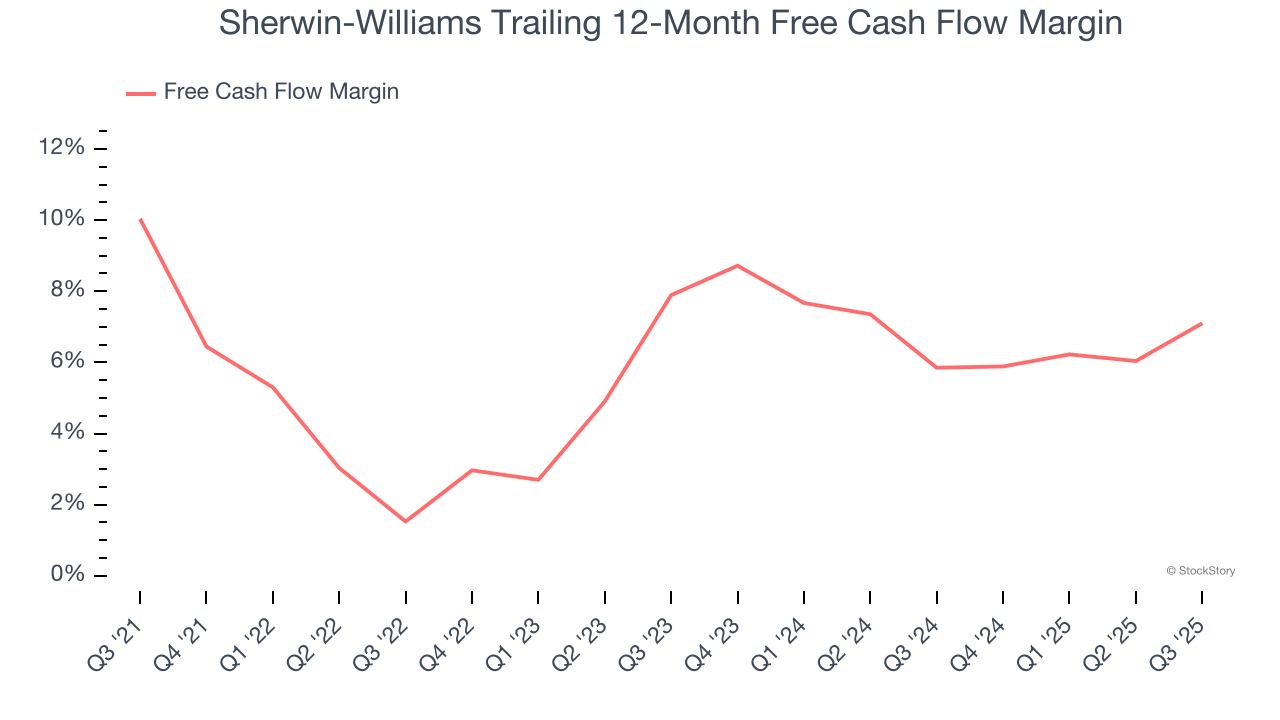
Free cash flow isn't a prominently featured metric in company financials and earnings releases, but we think it's telling because it accounts for all operating and capital expenses, making it tough to manipulate. Cash is king.
As you can see below, Sherwin-Williams’s margin dropped by 2.9 percentage points over the last five years. If its declines continue, it could signal increasing investment needs and capital intensity. Sherwin-Williams’s free cash flow margin for the trailing 12 months was 7.1%.
Final Judgment
Sherwin-Williams isn’t a terrible business, but it isn’t one of our picks. That said, the stock currently trades at 28.7× forward P/E (or $356.46 per share). Beauty is in the eye of the beholder, but our analysis shows the upside isn’t great compared to the potential downside. We're pretty confident there are more exciting stocks to buy at the moment. Let us point you toward one of our top software and edge computing picks.
Stocks We Would Buy Instead of Sherwin-Williams
If your portfolio success hinges on just 4 stocks, your wealth is built on fragile ground. You have a small window to secure high-quality assets before the market widens and these prices disappear.
Don’t wait for the next volatility shock. Check out our Top 9 Market-Beating Stocks. This is a curated list of our High Quality stocks that have generated a market-beating return of 244% over the last five years (as of June 30, 2025).
Stocks that have made our list include now familiar names such as Nvidia (+1,326% between June 2020 and June 2025) as well as under-the-radar businesses like the once-small-cap company Comfort Systems (+782% five-year return). Find your next big winner with StockStory today.